
SAVER
EV battery pack temperature monitoring system
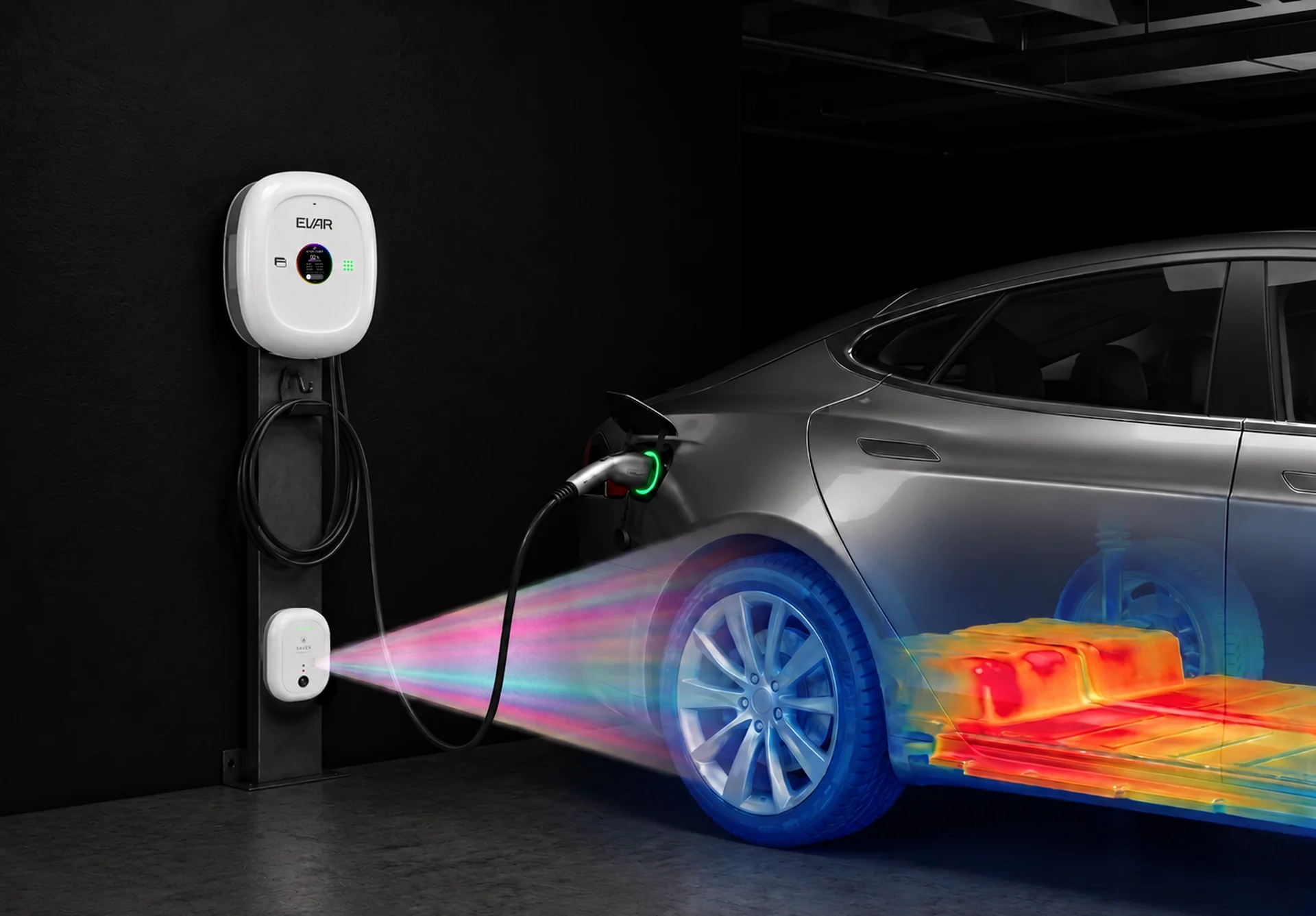
From the moment charging starts, SAVER monitors the battery pack beneath the car, picking up danger minutes, sometimes tens of minutes, before a conventional detector does.
Key capabilities
Watches the underbody directly
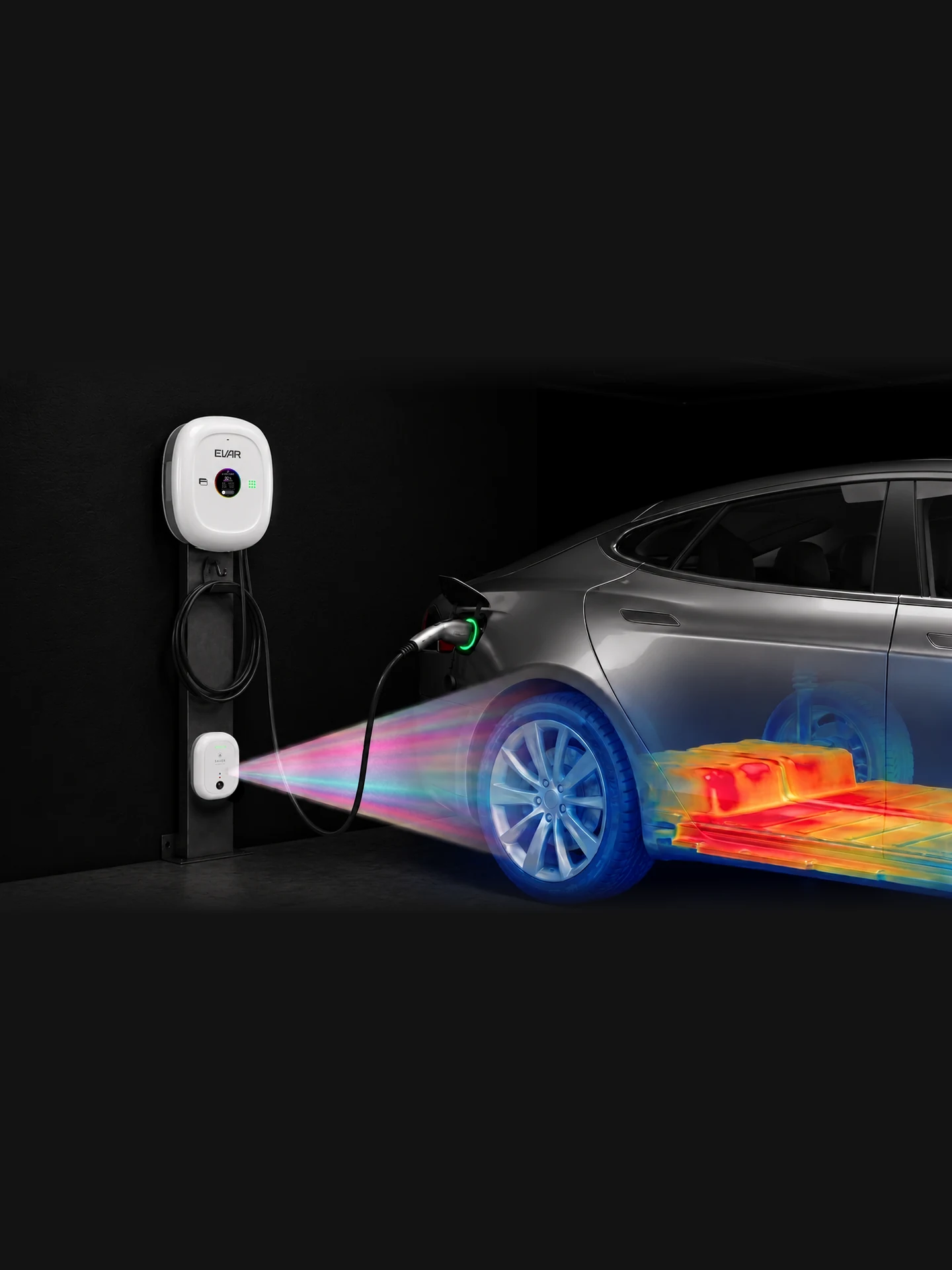
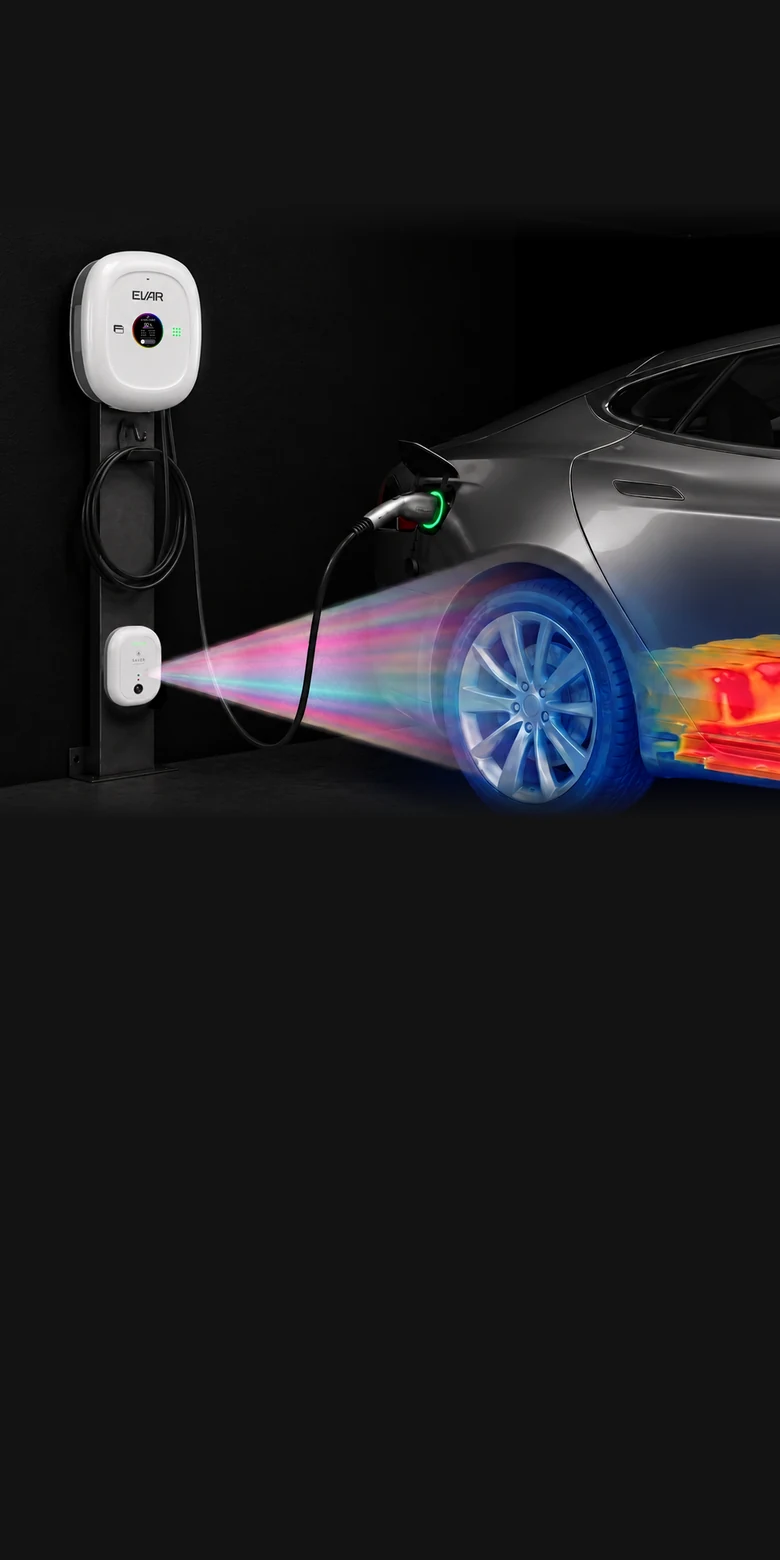
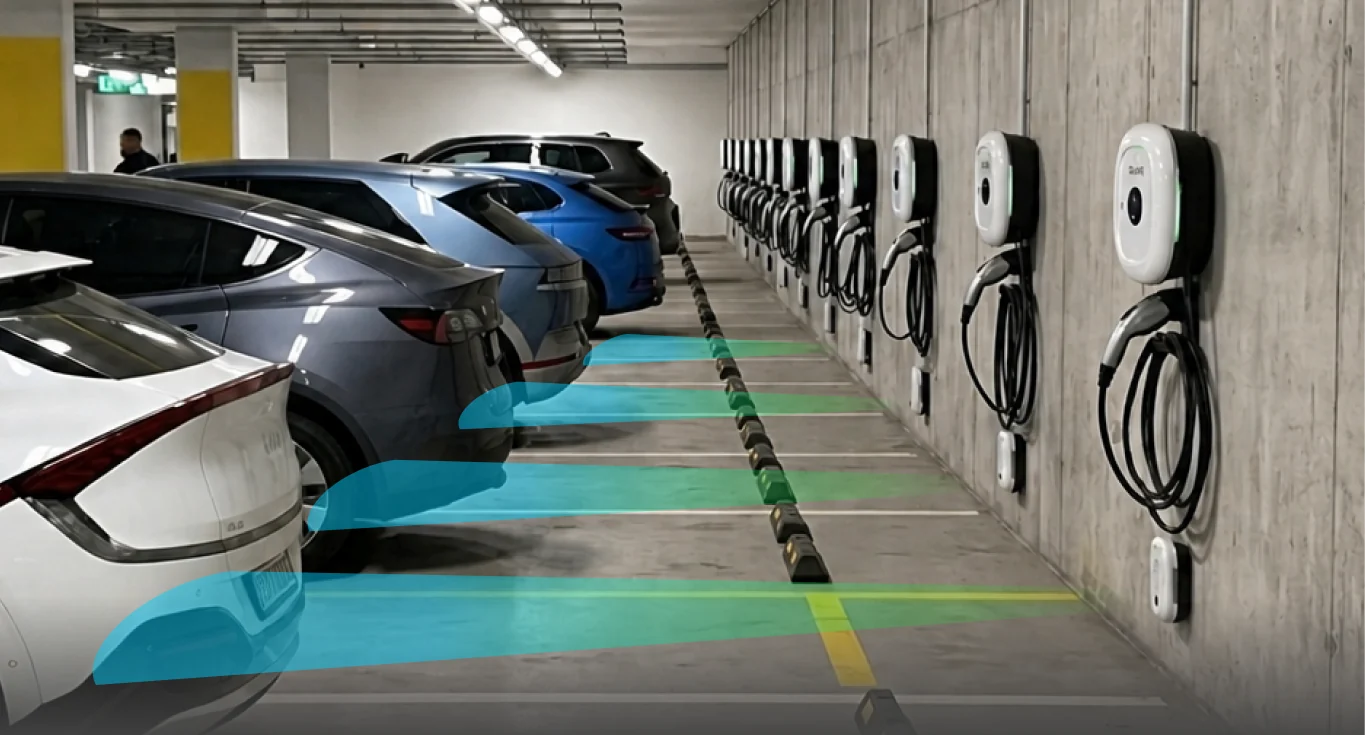
An EV battery sits under the vehicle, so a ceiling detector looking down finds that heat too late. SAVER mounts beneath the charger and watches the battery pack head-on.
Tracks temperature in real time
Monitoring begins the moment the connector is plugged in, following the battery pack's surface temperature on thermal imaging. Once it passes the threshold, an AI algorithm flags it as a hazard.
Stops charging the moment it detects trouble
When it detects trouble, charging stops and the adjacent chargers shut down too. A red beacon warns people on site, and an alert goes to the management office.
DETECTION POINT
Looking down from above is already too late
Regulations place fire detectors on the ceiling. They react only once smoke and flame are well underway — but an EV battery sits under the vehicle. SAVER sits right in front of that battery and measures its temperature directly.
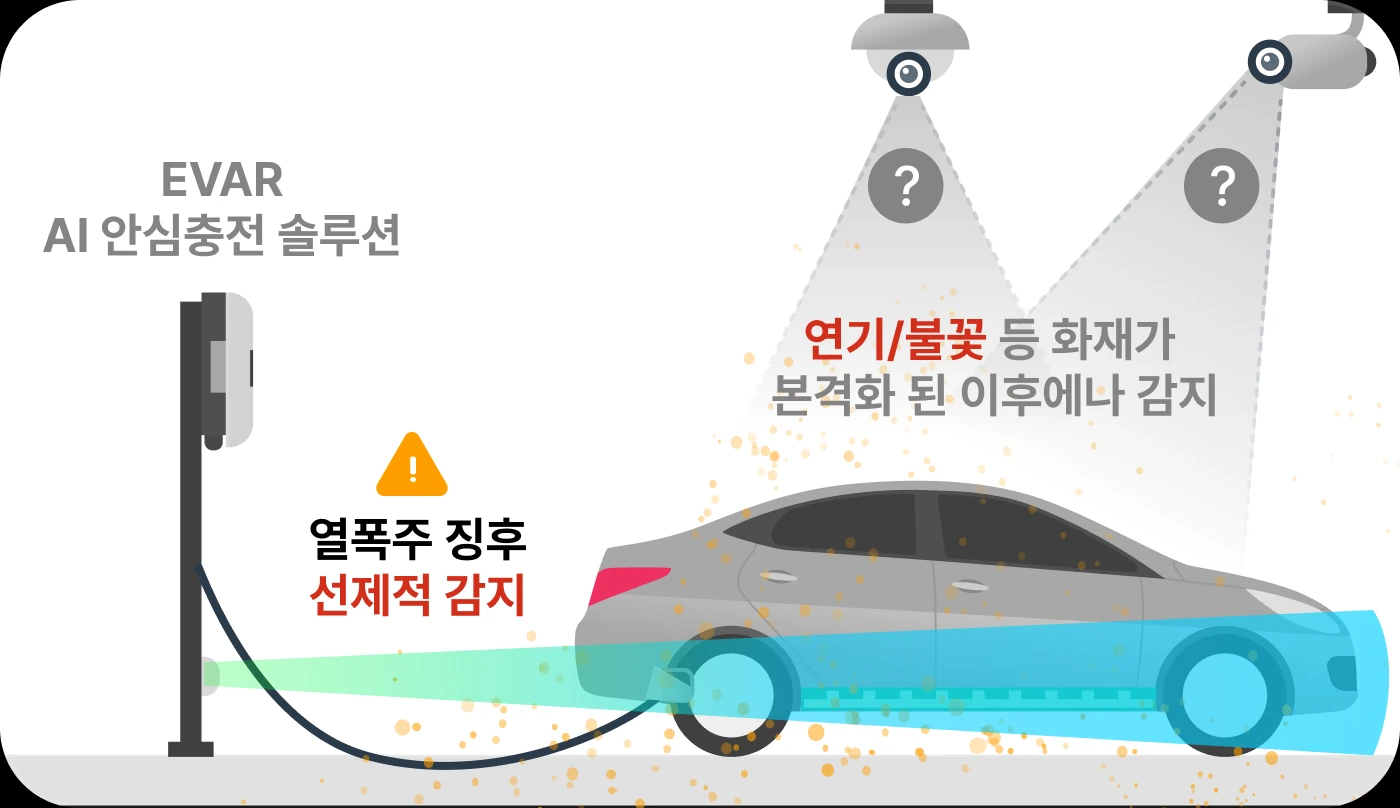
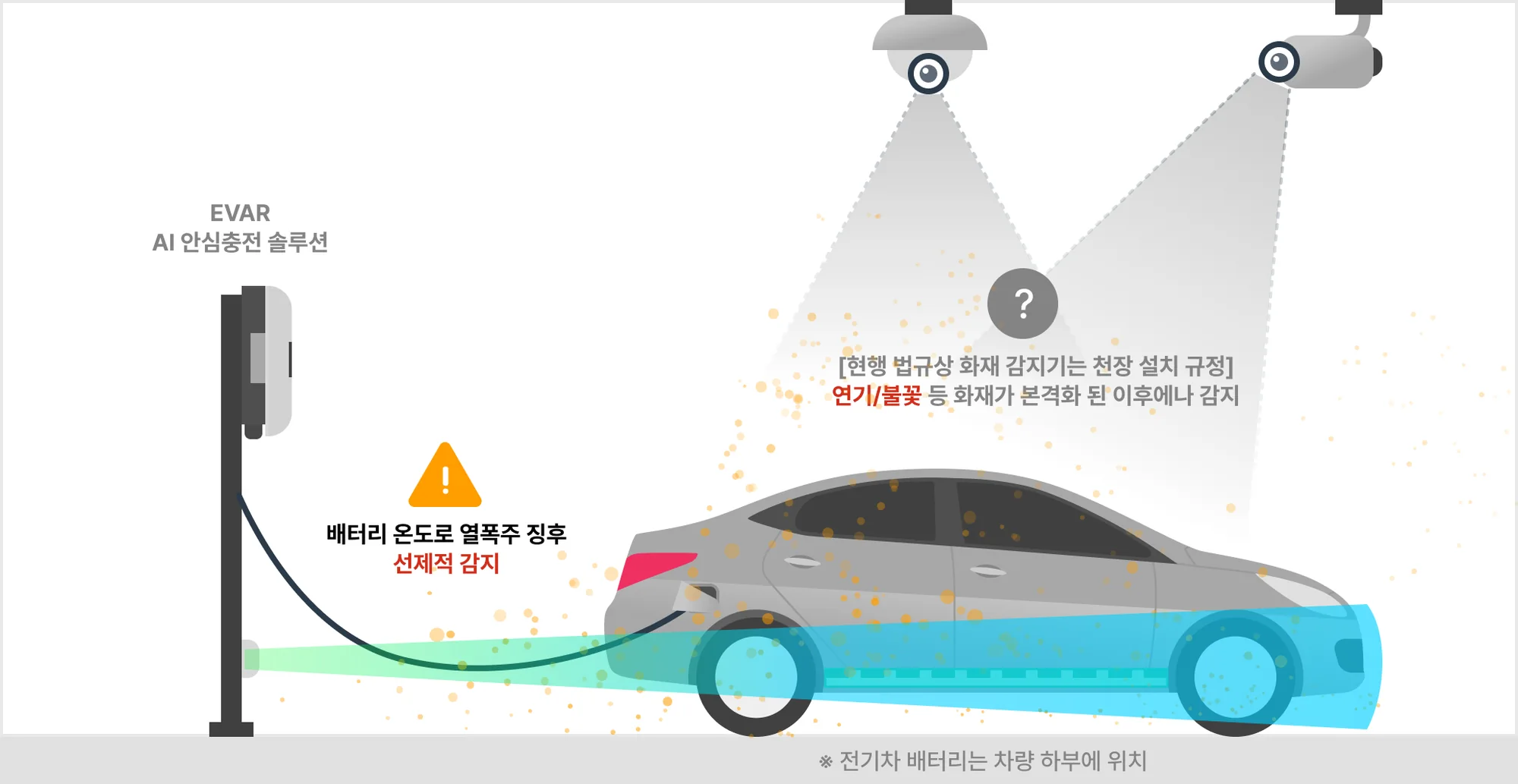
Ceiling fire detector
After smoke and flame spread
SAVER thermal sensor
As battery temperature rises
THERMAL RUNAWAY
Battery temperature is the surest early sign of fire
Thermal runaway unfolds in stages. SAVER detects it in stages 1 and 2, as temperature begins to climb, while conventional fire systems only begin to respond at stage 3, once smoke and flame appear.
SAVER detection window
01
Initial heating
60℃ – 120℃
Battery temperature starts to climb. This is the window where early detection is possible.
Minutes to hours before the next stage

Chain reaction
120℃ – 200℃
Heat grows exponentially, and from this point it becomes hard to control.
Seconds to minutes before the next stage
Conventional detector window
03
Runaway and ignition
Above 200℃
The battery is destroyed and catches fire. Suppression is difficult at this stage.
A five-step response that buys the critical first minutes
Detection is only the start. Charging stops, the adjacent chargers shut down, and the management office is notified — all automatically.
Charging starts
Underbody temperature monitoring begins the moment the connector is plugged in.
Real-time monitoring
The battery pack's surface temperature is tracked on thermal imaging in real time.
Anomaly check
An algorithm reads the temperature trend and decides within about a second whether it is a hazard.
Immediate cut-off
Charging stops, adjacent chargers shut down, and the red beacon and on-screen alert are raised.
Management office alert
The alert reaches the management office, buying the critical first minutes to respond.
No more worrying about EV fires in the basement car park

Zero running cost
No communication fees and no separate electrical work.

Adjacent charger shutdown
Neighbouring chargers shut down too, stopping the spread.

Battery care
Standby time after a full charge is minimised.

Time to respond
The underbody is watched at close range.
SAFETY PACKAGE
An AI smart charger and a high-performance thermal camera, combined into one safe-charging solution
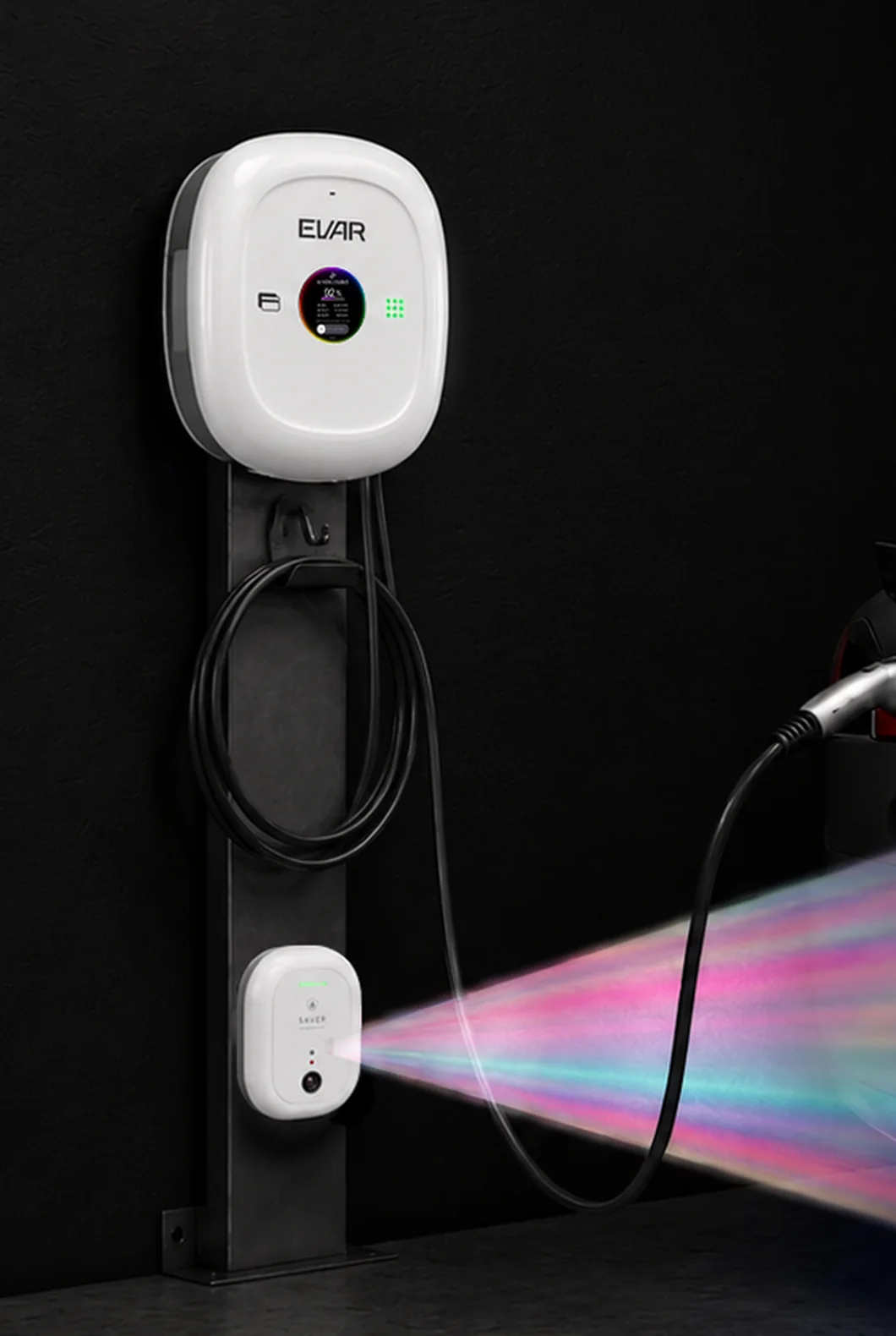
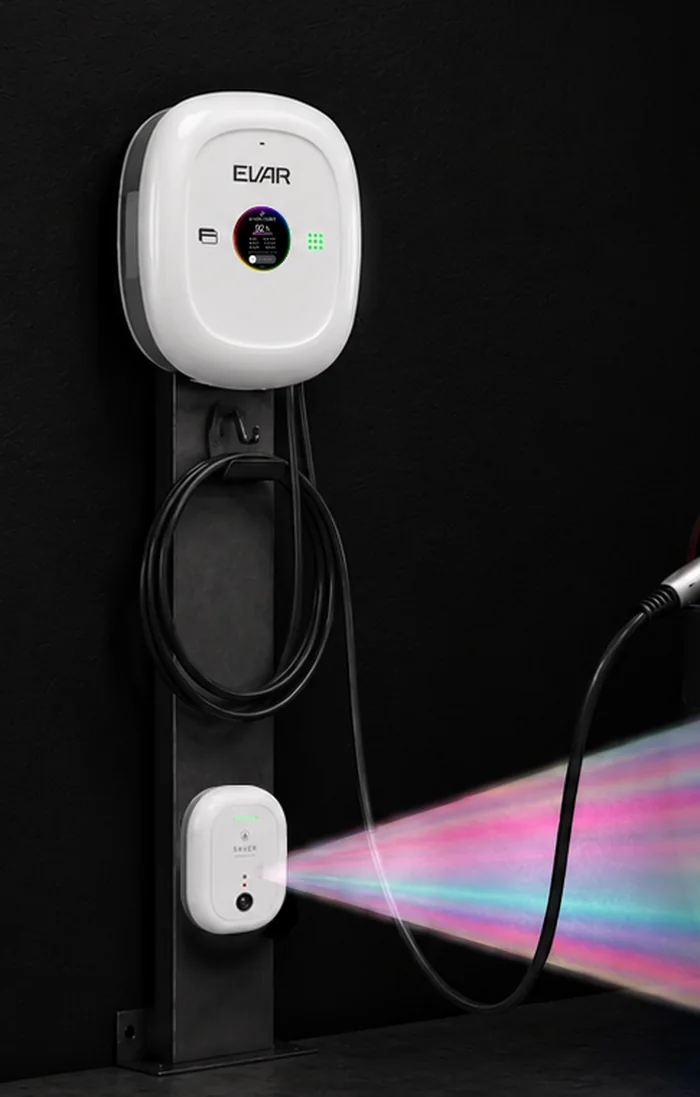
SAVER mounts beneath ACE PRO MAX as an accessory. On detection it raises its own red beacon on site first.
SAVER detects abnormal battery temperature and ACE PRO MAX cuts the power, the two working as one product. During installation, the laser pointer on the SAVER unit shows where the sensor is looking.
See ACE PRO MAXThe safe-charging package that protects the golden hour
One request covers ACE PRO MAX, SAVER and the installation, all as a single package.
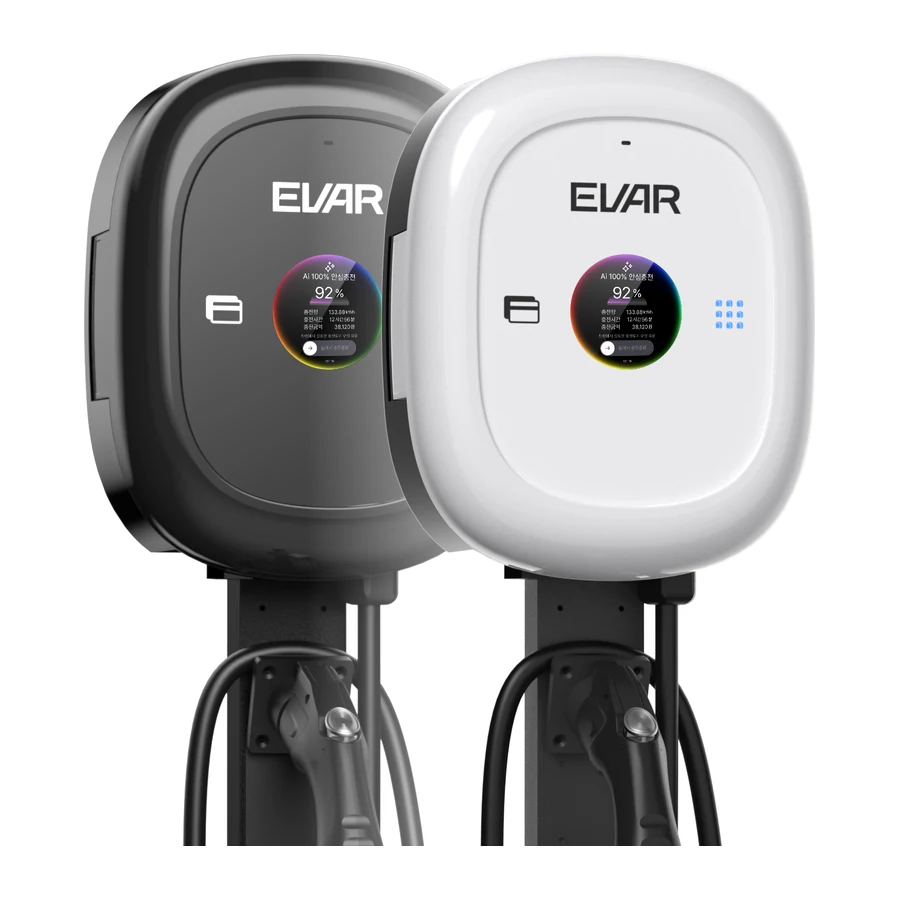

ACE PRO MAX
AI smart chargerA 7kW AI smart charger that tunes charging speed to how the car is actually driven.
- Shortens the idle time after a full charge to look after battery life
- Stops charging and cuts the neighbouring chargers when an anomaly is found
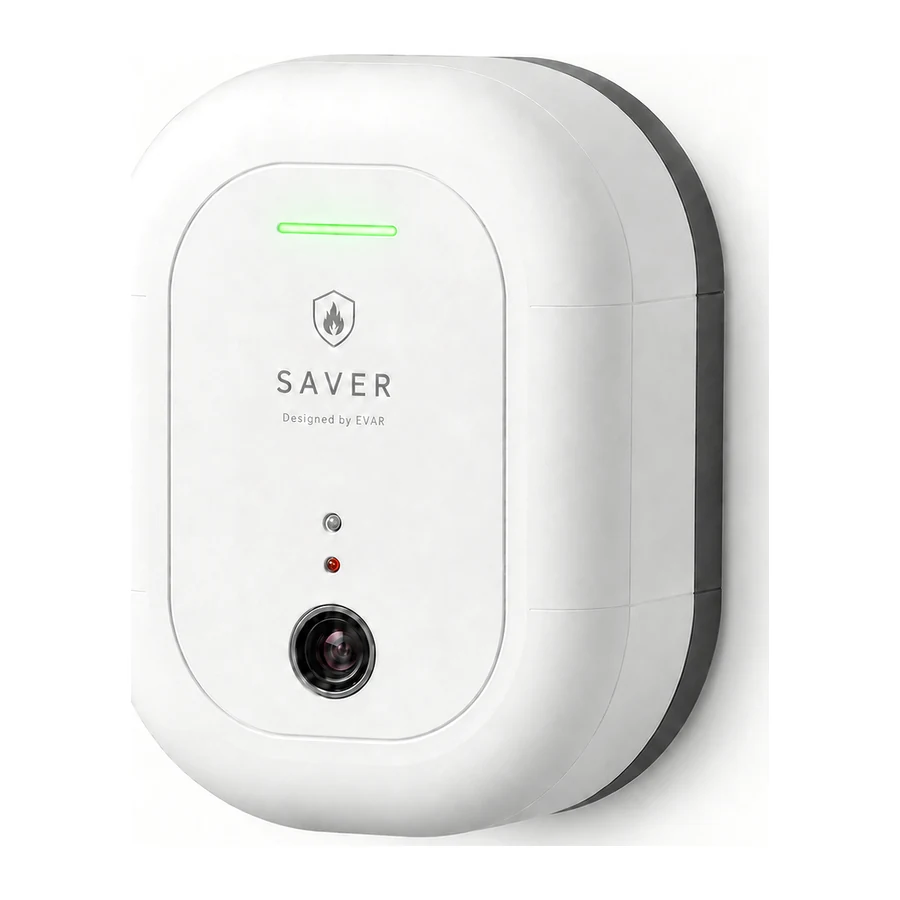
SAVER
High-performance thermal sensorA sensor accessory that keeps a thermal watch on the battery pack under the vehicle.
- Tracks the battery pack surface temperature in real time, judging an anomaly within about a second
- Catches the danger while thermal runaway is still in its early heating stage
- Needs no data plan and no separate electrical work
From first conversation to installation, here is how it works
We look at your complex first, then propose how to install. Nothing has to be decided at the consultation stage.
Free site survey
We check the size of the complex, then visit to assess what the site allows.
Agree the plan
We settle the installation and operating setup around your site, from partner-run to EVAR-run options.
Install and keep watch
After installation, 24/7 support keeps it running.
Talk to us about your complex
Leave your complex details and we will call to tell you whether installation is possible and roughly what it would involve.
The charger, the battery temperature sensor and the installation all come together. Nothing to arrange separately.
Myths and facts about EVs
It can be prepared for.
EV fire coverage is alarming. Do they really happen that often?
Statistically, EVs catch fire less often than internal-combustion vehicles.
- Korean National Fire Agency figures (fires per 10,000 vehicles): 1.9 for ICE vehicles versus 1.3 for EVs — about 40% lower.
- The frequency is lower, but news coverage makes the perceived risk far larger than the real one.
I have heard EV fires are very hard to put out.
When sprinklers operate normally, the fire is contained and extinguished without spreading.
- LH certified field test (March 2026): with sprinklers working, zero damage to vehicles other than the one on fire.
- Real case (Gunsan apartment, 2024): fully extinguished in 45 minutes with no damage to surrounding vehicles.
And if a fire does happen, how is it compensated?
Korea's EV fire insurance covers up to KRW 15 billion, including damage to surrounding vehicles and buildings.
- In force from 1 July 2026, jointly funded by the government and vehicle manufacturers.
- Fires of undetermined cause are settled on a compensate-first, reconcile-later basis.
FUNCTIONS
Five core functions
Want to learn more?
EVAR experts will provide customized consultation. Click the inquiry button now.